Sub-Tracks of Innovations in Dental Techniques and Technology
Digital Dentistry, CAD/CAM Systems, 3D Printing Applications, Laser-Assisted Dentistry, Minimally Invasive Procedures, Smart Biomaterials, Regenerative Dental Therapies, Virtual Reality in Training, Tele dentistry Solutions, AI & Machine Learning in Dentistry
Advancements in Dental Techniques and Technology
The Innovations in Dental Techniques and Technology program highlights the rapid evolution of modern dental care, significantly enhancing clinical precision, efficiency, and patient experience.
One notable area of advancement is teeth whitening, where modern approaches utilize improved bleaching agents that minimize sensitivity while maximizing effectiveness. Technologies such as LED activation and laser-assisted whitening enable faster and more targeted results. Digital shade-matching systems ensure accurate color outcomes, while 3D imaging supports personalized treatment planning.
Additionally, the use of nano-hydroxyapatite and remineralization agents helps strengthen enamel during whitening procedures. These innovations collectively improve safety, comfort, and the longevity of results, making cosmetic treatments more reliable and accessible.
Program Initiatives
The program focuses on integrating advanced technologies to transform dental practice and education. Key initiatives include:
- Digital Dentistry & CAD/CAM: Streamlining workflows and enabling precise design and fabrication of restorations.
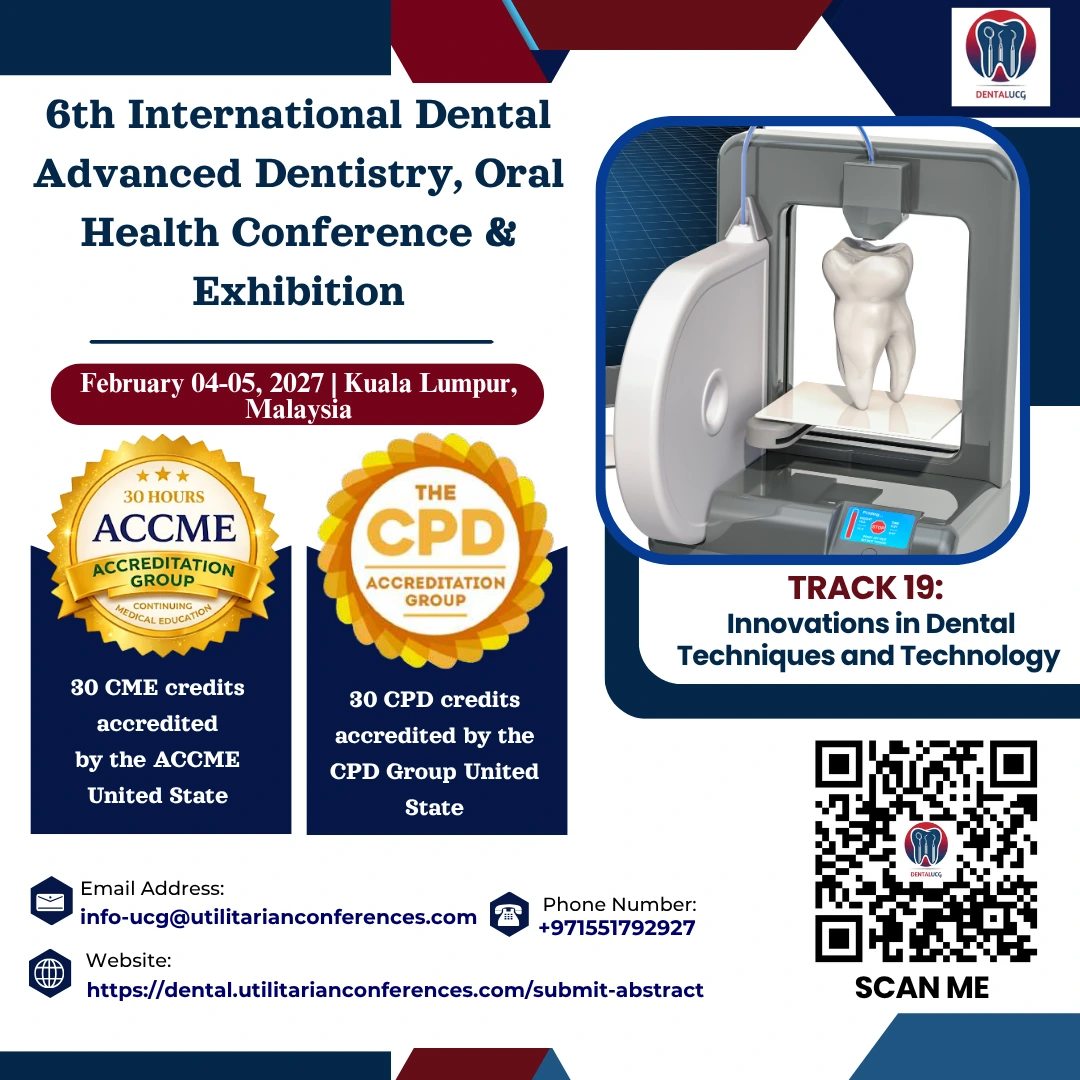
- 3D Printing: Producing customized prosthetics, surgical guides, and dental models with high accuracy.
- Laser Dentistry: Enhancing precision, reducing discomfort, and improving healing outcomes.
- Minimally Invasive Techniques: Preserving natural tooth structure while maximizing patient comfort.
- Smart Materials: Developing advanced biomaterials with improved strength, adaptability, and longevity.
- Regenerative Dentistry: Exploring tissue engineering and stem cell applications for dental repair and regeneration.
- Virtual Reality: Enabling immersive and effective training for dental professionals.
- Teledentistry: Expanding access to care, especially in remote and underserved areas.
- AI & Machine Learning: Supporting early diagnosis, treatment planning, and personalized patient care.